Etcher (also known as balenaEtcher) is a free, open-source image flasher that creates bootable USB flash drives or SD cards from .img and .iso files.
In this tutorial, you will learn how to install Etcher on Ubuntu using the AppImage format or the command line interface.
Note: Etcher is an easy way to write a Linux image on an SD card of USB flash.
Prerequisites
- This tutorial uses Ubuntu 26.04, but applies to older versions as well.
- Access to the terminal.
- sudo or root privileges.
How to Install Balena Etcher on Ubuntu via AppImage
Etcher is available for download as an AppImage, a portable software distribution format. AppImage makes it easy to run applications without a complicated installation process.
The following steps help you run Etcher from its AppImage.
Important: This method only works on Ubuntu versions up to 25.10. For Ubuntu 26.04, use the APT method below.
Step 1: Download AppImage from Balena's Website
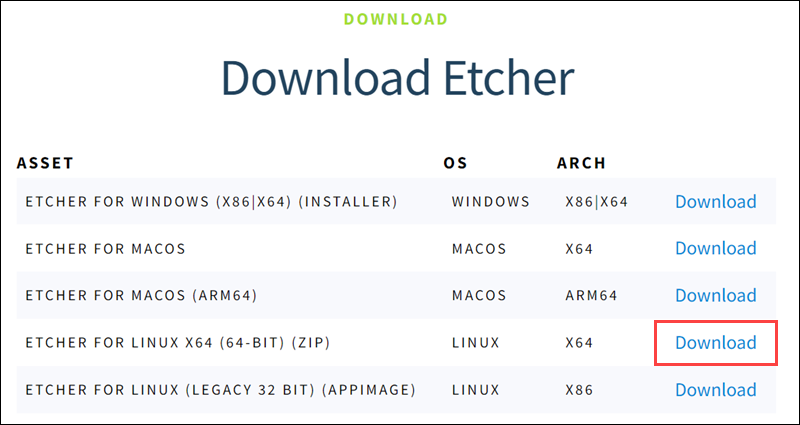
Visit Etcher's official website and download the AppImage for Linux. Since Ubuntu supports only 64-bit architecture, choose the x64 version.
Step 2: Extract the .zip File
To extract the .zip file, navigate to where you downloaded it, right-click the .zip file, and select Extract.
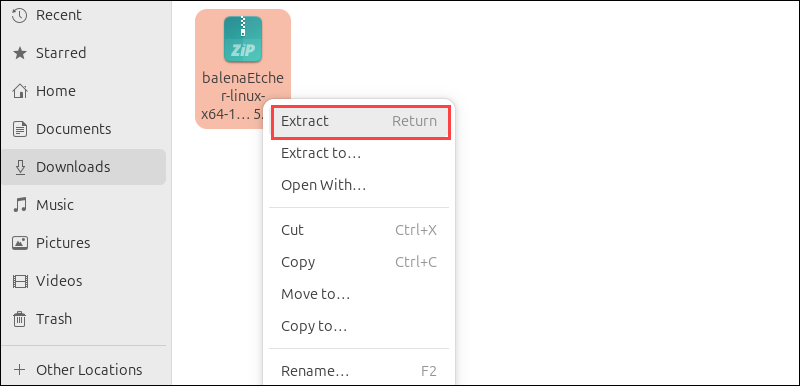
The .zip file extracts to the current directory.
Step 3: Run Etcher
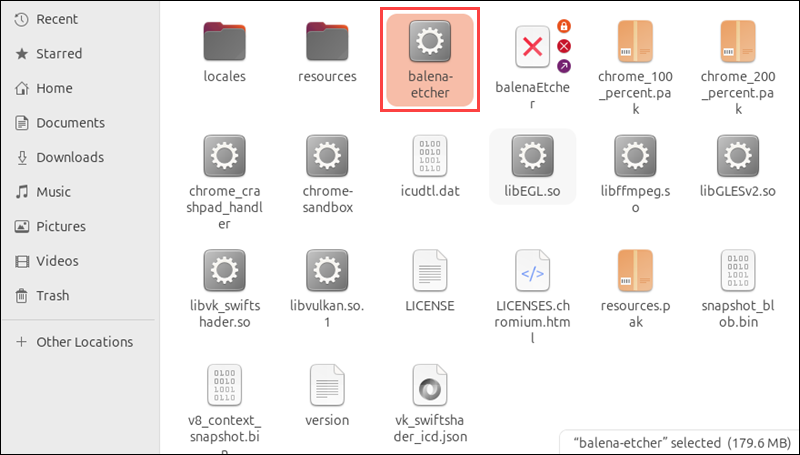
After you extract the files, locate the balena-etcher file and run it.
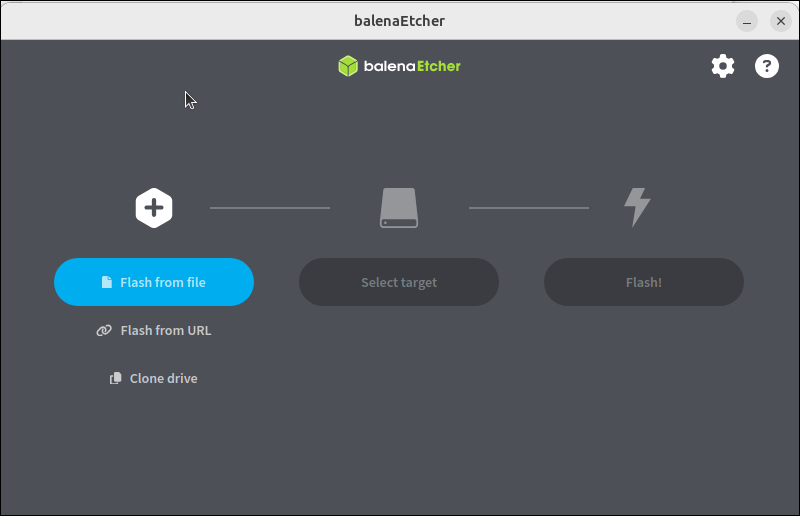
The Etcher tool interface appears:
Tip: To uninstall Etcher AppImage, delete the file you downloaded.
How to Install Balena Etcher on Ubuntu via Apt
Installing Balena Etcher on Ubuntu via apt offers a straightforward method for setting up this tool to create bootable media.
Unlike using the AppImage, installing via apt ensures Balena Etcher is integrated into your system and easily accessible from the terminal. The following text walks you through each step to install Balena Etcher using apt on Ubuntu.
Step 1: Install curl and jq
This method uses curl to download the latest Etcher deb package from GitHub, and jq to parse GitHub's JSON response. First, update your system package repository information with:
sudo apt updateNext, install curl and jq with:
sudo apt install curl jq -yStep 2: Download Etcher
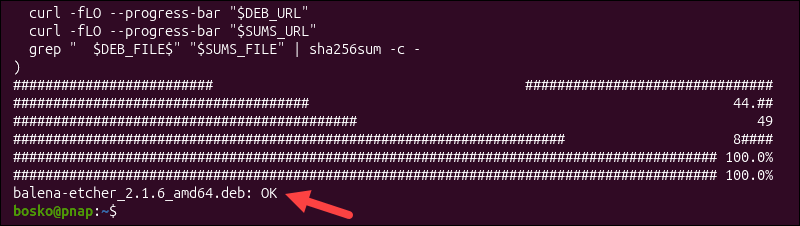
Use the command below to resolve and download the latest Balena Etcher .deb package from GitHub, and verify the checksums:
(
  set -e
  API_URL="https://api.github.com/repos/balena-io/etcher/releases/latest"
  rm -f balena-etcher_*_amd64.deb SHA256SUMS.Linux.x64.txt
  RELEASE_JSON=$(curl -fsSL "$API_URL")
  DEB_URL=$(printf '%s\n' "$RELEASE_JSON" | jq -r '[.assets[].browser_download_url | select(test("balena-etcher_[0-9.]+_amd64\\.deb$"))][0] // empty')
  SUMS_URL=$(printf '%s\n' "$RELEASE_JSON" | jq -r '[.assets[].browser_download_url | select(test("SHA256SUMS\\.Linux\\.x64\\.txt$"))][0] // empty')

  if [ -z "$DEB_URL" ] || [ -z "$SUMS_URL" ]; then
    echo "Could not find the balenaEtcher amd64 .deb or Linux checksum file."
    exit 1
  fi

  DEB_FILE=${DEB_URL##*/}
  SUMS_FILE=${SUMS_URL##*/}

  curl -fLO --progress-bar "$DEB_URL"
  curl -fLO --progress-bar "$SUMS_URL"
  grep "  $DEB_FILE$" "$SUMS_FILE" | sha256sum -c -
)
Step 3: Install Etcher
Proceed with installing Etcher using apt. The package manager installs the local .deb file and resolves any dependencies. Run the following command:
DEB_FILE=$(find . -maxdepth 1 -type f -name 'balena-etcher_*_amd64.deb' -printf '%f\n' | sort -V | tail -n 1)
test -n "$DEB_FILE" || { echo "No balenaEtcher .deb file found in this directory."; false; }
sudo apt install -y "./$DEB_FILE"
You can verify the installation by checking the installed version and command path:
apt-cache policy balena-etcher
command -v balena-etcher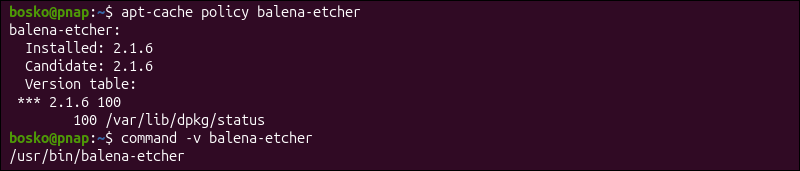
Step 3: Run Etcher
Run Etcher by finding it in the list of applications on your Ubuntu system. Alternatively, start it via the terminal by running:
balena-etcher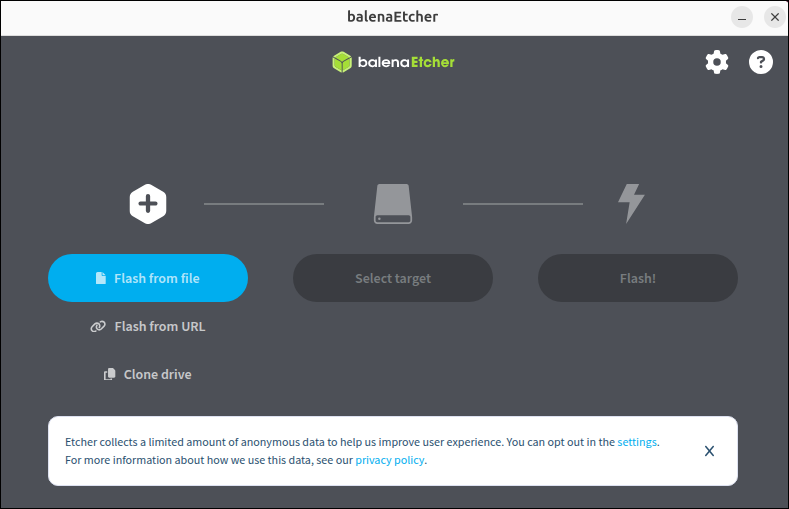
Conclusion
This tutorial presented two simple methods to install Etcher, a popular bootable media creator. AppImage comes in handy if you need Etcher for a single use. On the other hand, if you plan to use the application regularly, you may want to perform a full installation via the command line.
Next, learn how else to use the apt package manager on Ubuntu.